Why does my shoulder hurt? Shoulder pain can make everyday activities—from reaching overhead to getting dressed—more difficult than they used to be. You may notice pain when lifting your arm, reaching behind your back, washing your hair, or even trying to sleep on the affected side.
Shoulder pain can develop gradually from repetitive use and age-related changes, or it can happen suddenly after a fall, sports injury, or other trauma. Because the shoulder relies on muscles, tendons, ligaments, cartilage, and multiple joints to provide its wide range of motion, there are many possible causes.
The good news is that shoulder pain does not automatically mean surgery is necessary. Depending on the cause and severity of your condition, treatment may include physical therapy, medications, injections, laser therapy, or other nonsurgical options.
7 Common Causes of Shoulder Pain
1. Rotator Cuff Injuries
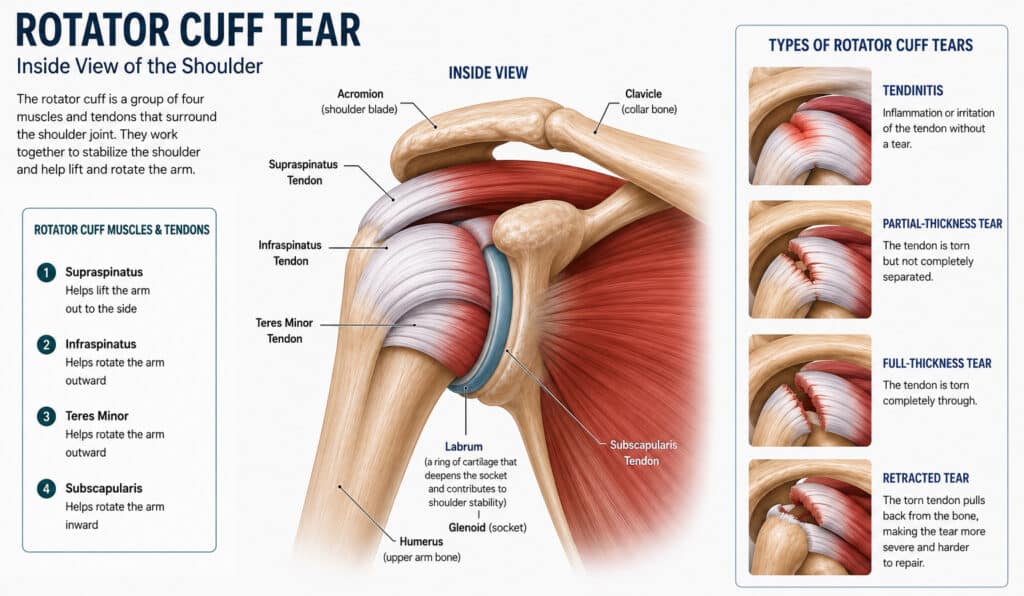
The rotator cuff is a group of four muscles and their tendons that help stabilize the shoulder and allow you to lift and rotate your arm.
Rotator cuff problems can range from tendon irritation and inflammation to partial or complete tears. They may develop gradually from repetitive use or age-related changes, or they can occur after an injury.
Common symptoms include:
- Pain when lifting or lowering your arm
- Weakness in the shoulder or arm
- Pain reaching overhead or behind your back
- Difficulty with everyday activities
- Shoulder pain that is worse at night
You may notice the pain with everyday movements, such as reaching overhead, washing your hair, or reaching behind you to fasten a seatbelt.
Treatment depends on the type and severity of the injury and may include physical therapy, activity modification, medications, injections, or surgery.
2. Shoulder Impingement
Shoulder impingement occurs when soft tissues, including the rotator cuff tendons and bursa, become compressed or irritated as you raise your arm.
Pain may be more noticeable when reaching overhead or making repetitive shoulder movements. You might notice it when reaching into a cabinet, putting on a jacket, or doing other everyday activities that require you to raise your arm.
Treatment typically focuses on reducing irritation and improving shoulder mechanics. Physical therapy, activity modification, medications, injections, and other treatments may be recommended depending on the cause and severity of your symptoms.
3. Shoulder Bursitis
A bursa is a small, fluid-filled sac that helps reduce friction between tissues around a joint. When the bursa becomes irritated and inflamed, it is called bursitis.
Shoulder bursitis can cause pain with movement and may make activities such as reaching overhead or washing your hair uncomfortable. It can also occur alongside rotator cuff tendinitis or other shoulder problems.
Treatment may include activity modification, physical therapy, medications, or an injection when appropriate.
4. Shoulder Arthritis
Arthritis can affect the shoulder joints and cause pain, stiffness, and loss of motion.
Shoulder arthritis often develops gradually. You may notice that reaching overhead, putting on a coat, or reaching behind your back has become more difficult.
Some people also experience grinding, clicking, or pain that becomes worse with activity or at night.
Treatment depends on the type and severity of arthritis. Nonsurgical options may include activity modification, physical therapy, medications, and injections. In more advanced cases, shoulder replacement may be considered.
5. Frozen Shoulder
Frozen shoulder, also called adhesive capsulitis, occurs when the tissues surrounding the shoulder joint become tight and restrict movement.
Unlike some shoulder conditions where pain is the primary symptom, frozen shoulder often causes significant stiffness and loss of range of motion.
You may have difficulty reaching behind your back, putting on a shirt, or raising your arm overhead.
Treatment focuses on managing pain while gradually restoring shoulder movement. Physical therapy is often an important part of treatment, and other treatments may be recommended depending on the stage and severity of the condition.
6. Labral Injuries
The labrum is a ring of cartilage around the shoulder socket that helps deepen the socket and contributes to shoulder stability.
A labral injury can occur after trauma, a shoulder dislocation, a fall, or repetitive overhead activity.
Symptoms can include deep shoulder pain, catching or popping, pain with overhead movements, or a feeling that the shoulder is unstable.
Not every labral injury requires surgery. Treatment depends on the type of tear, your symptoms, activity level, and whether the shoulder is unstable.
7. Shoulder Instability
Shoulder instability occurs when the upper arm bone does not stay securely centered in the shoulder socket.
It can occur after a shoulder dislocation or other injury, but some people may have ongoing instability because the supporting tissues around the shoulder have become stretched or damaged.
Symptoms may include:
- A feeling that the shoulder is slipping or giving out
- Repeated dislocations
- Popping or shifting
- Pain during certain movements
- A feeling that the shoulder is loose
Treatment may begin with activity modification and physical therapy designed to improve strength and stability. Repeated dislocations or persistent instability may require surgery.
When Should You See an Orthopedic Specialist for Shoulder Pain?
Not every episode of shoulder soreness requires an orthopedic evaluation. Mild discomfort after an activity may improve with rest and avoiding the movement that aggravates it.
However, consider an orthopedic evaluation if your shoulder pain:
- Doesn’t improve with rest or activity modification
- Continues to get worse
- Makes it difficult to lift your arm
- Causes significant weakness
- Limits your normal range of motion
- Interferes with sleep
- Started after a fall or other injury
- Causes repeated popping, catching, or instability
- Interferes with your normal activities
If you find yourself changing how you get dressed, avoiding certain movements, or no longer being able to do activities you enjoy because of shoulder pain, it may be time to have it evaluated.
After a significant shoulder injury, seek prompt medical attention if your shoulder looks deformed, you are unable to move your arm, or you think you may have a dislocation or fracture.
It’s also important to know that shoulder pain isn’t always caused by a problem in the shoulder itself.Pain from the neck, nerves, heart, or other areas of the body can sometimes be felt in the shoulder. If you’reunsure what is causing your pain, an evaluation can help determine the underlying cause.
What Happens During an Orthopedic Evaluation?
An orthopedic evaluation starts with understanding your symptoms and how they affect your daily life.
Your provider may ask:
- When did the pain begin?
- Did it start suddenly or gradually?
- Was there an injury?
- What movements make the pain worse?
- Do you have pain at night?
- Have you noticed weakness or stiffness?
- Does the shoulder feel unstable?
Your provider will also examine your shoulder, looking at your range of motion, strength, tenderness, and how the shoulder moves.
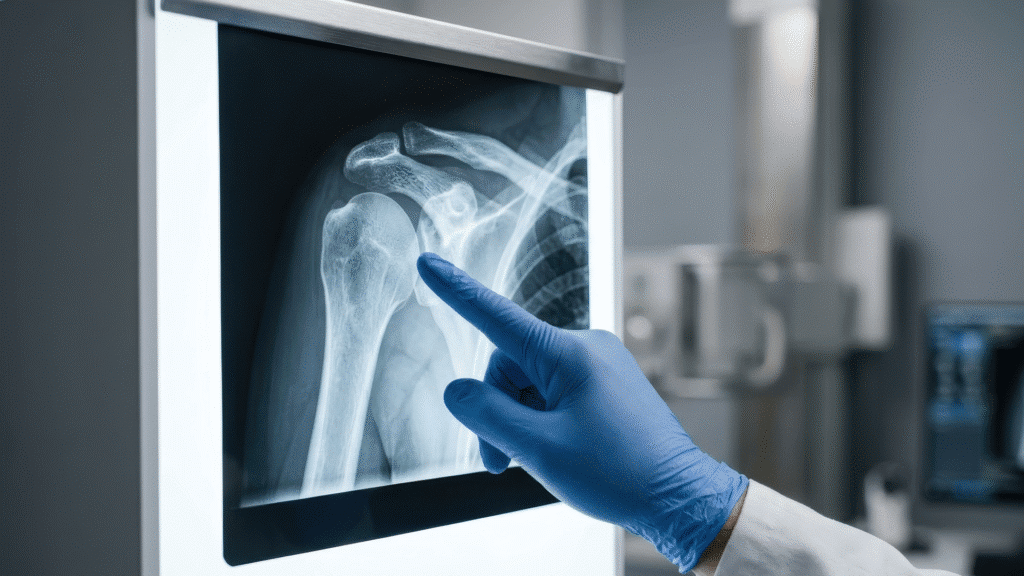
Depending on your symptoms and examination, imaging may be recommended. X-rays can provide information about the bones and joint space, while an MRI or ultrasound may provide more information about soft tissues such as the rotator cuff and other tendons.
The goal is to determine what is causing your shoulder pain—not simply where it hurts.
Shoulder Pain Treatment Options
There isn’t one treatment that works for every cause of shoulder pain. Your treatment plan should be based on your diagnosis, the severity of the condition, your activity level, and your goals.
Physical Therapy
Physical therapy can help improve shoulder strength, flexibility, range of motion, and mechanics.
Depending on the condition, therapy may focus on strengthening the rotator cuff and supporting muscles, improving mobility, or restoring normal shoulder function.
Medications
Over-the-counter or prescription medications may be recommended to help manage pain and inflammation when appropriate. Talk with your healthcare provider about whether a medication is right for you.
Corticosteroid Injections
A corticosteroid injection may be recommended for certain shoulder conditions to reduce inflammation and provide temporary pain relief.
PRP Injections
Platelet-rich plasma (PRP) injections may be considered for certain shoulder conditions.
PRP is made using a sample of your own blood. The blood is processed to concentrate platelets, which are then injected into the targeted area.
Research on PRP for shoulder conditions is ongoing, and results can vary. PRP isn’t appropriate for every type of shoulder pain, but it may be an option to discuss with an orthopedic specialist.
Laser Therapy
Laser therapy may be considered as a nonsurgical treatment option for certain musculoskeletal shoulder conditions.
Laser therapy uses concentrated light energy directed at the area being treated and may be used as part of a broader treatment plan to help manage pain and support function.
Because laser therapy isn’t appropriate for every shoulder condition, an evaluation can help determine whether it may be an appropriate treatment option.
Surgery
Some shoulder problems may benefit from surgery, particularly certain rotator cuff tears, recurrent shoulder instability, significant structural injuries, or advanced arthritis.
Depending on the condition, surgical options may include arthroscopic procedures or shoulder replacement.
Surgery isn’t automatically the first step. Your orthopedic specialist can help you understand your diagnosis and determine whether nonsurgical treatment or surgery is appropriate.
Don’t Ignore Persistent Shoulder Pain
Shoulder pain can have many causes, and symptoms can overlap. Pain when lifting your arm, difficulty sleeping, weakness, or stiffness may all have different underlying causes.
If shoulder pain is interfering with everyday activities or the things you enjoy, an orthopedic evaluation can help identify the underlying problem and determine what treatment options may be available.
Shoulder pain doesn’t automatically mean surgery. Depending on your diagnosis, there may be several nonsurgical treatment options to consider.
Ready to Find Out What’s Causing Your Shoulder Pain?
At Granite Orthopaedics, our orthopedic specialists can evaluate your shoulder pain, help identify what’scausing it, and explain the treatment options available to you.
Call Granite Orthopaedics at 928-777-9950 to schedule an appointment.
Granite Orthopaedics
928-777-9950
graniteortho.com
This article is intended for general educational purposes and is not a substitute for medical advice, diagnosis, or treatment from a qualified healthcare professional.